GDPR compliance breaks down when organizations treat it as a one-time readiness exercise. The regulation requires accountability that is demonstrable, current, and persistent. OneTrust replaces one-time reviews with a live program that keeps records current, enforces consent across downstream systems, and fulfills data subject requests on time with full documentation.

Manage GDPR Compliance As a Continuous Program, Not a Project


OneTrust is an official Europrivacy technology partner. This connects your compliance operations to the highest formal standard under EU data protection law.
Turn Readiness Into Continuous Oversight
GDPR requires organizations to show how they comply, assess high-risk processing, and keep that work current as things change. OneTrust provides readiness assessments aligned to the seven GDPR principles, documented remediation plans, and automated DPIA and PIA workflows that support privacy by design and compliance.
Because assessments stay tied to the processing activities they govern, OneTrust can flag changes in data flows, systems, or usage, route updates for review, and capture decisions and approvals in one place. That keeps your program current and your evidence ready when regulators ask for it.

Maintain a Live Record of Processing Activity
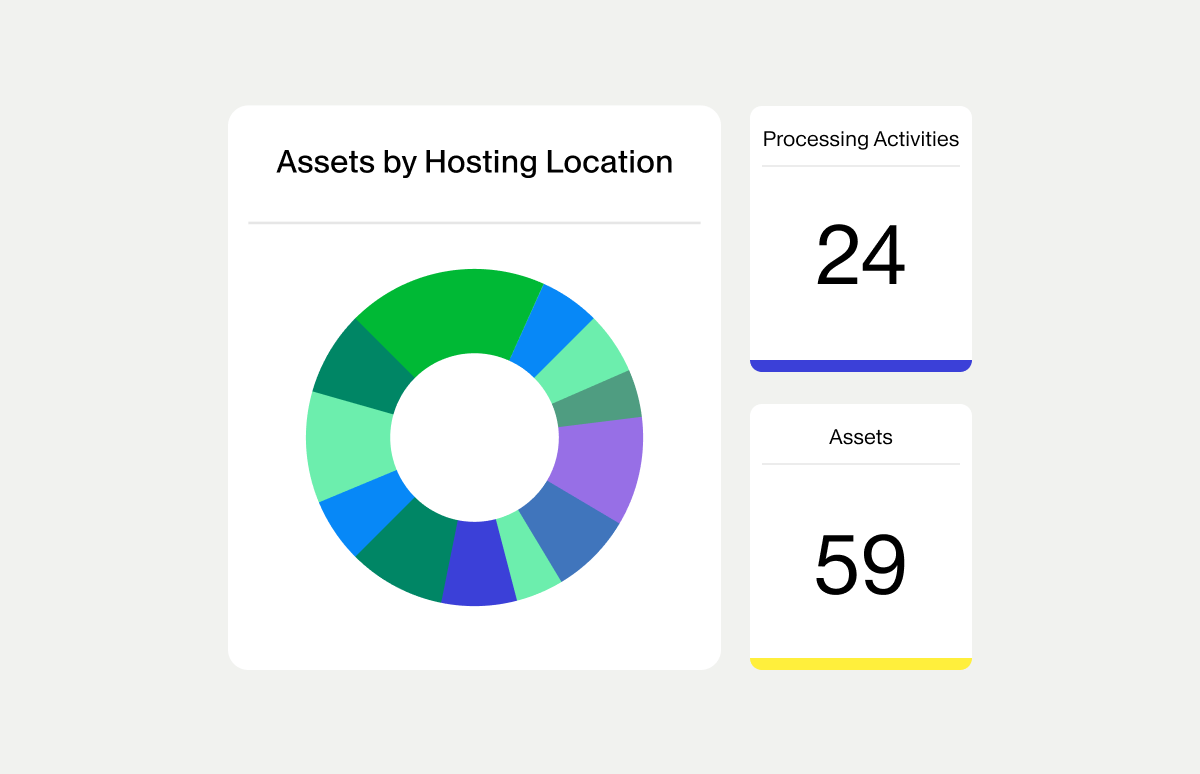
GDPR requires controllers and processors to maintain a current written record of processing activities. OneTrust generates and maintains a live RoPA by drawing from assessments, system integrations, questionnaire responses, and bulk imports into a central processing inventory. The record updates as processing activities change, so your documentation is audit-ready, reflecting operational reality.
Enforce Consent Across Every Channel
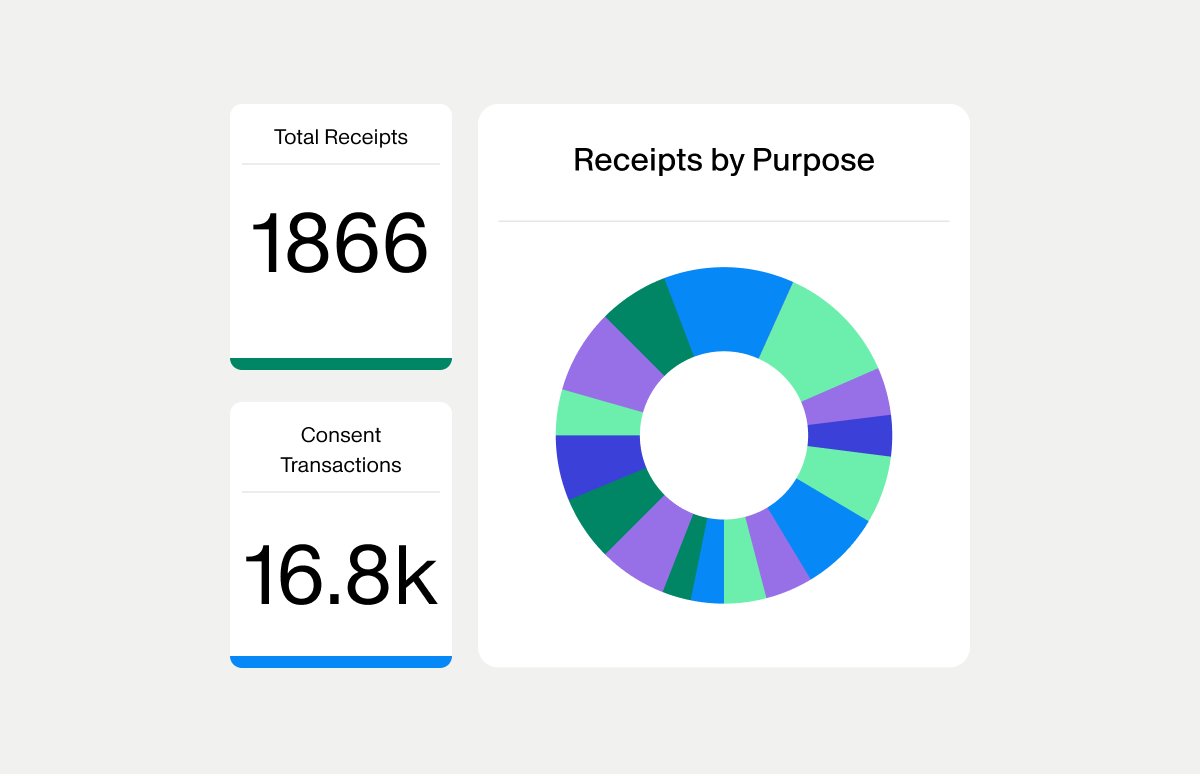
GDPR requires organizations to demonstrate that consent was freely given, specific, informed, and unambiguous. Organizations must also honor consent withdrawal as easily as collection. OneTrust Consent & Preferences captures consent across websites, mobile applications, and internal systems through a centralized consent platform, recording each transaction with a timestamped receipt. Consent preferences are enforced in downstream systems automatically, so withdrawal takes effect without manual steps.
If a data subject or supervisory authority requests evidence of lawful basis, the OneTrust platform can produce the consent history for any individual across any channel.
Fulfill Data Subject Rights on Time
GDPR establishes enforceable individual rights: access, rectification, erasure, portability, restriction, and objection with a response requirement within one month, with a two-month extension available for complex requests. Missed timelines are one of the most common grounds for regulatory complaints.
OneTrust automates the full DSAR workflow from intake to fulfillment — routing requests to the right teams, triggering automated data discovery and redaction, and logging every action with timestamps. Every request, response, extension notice, and discovery outcome is preserved, creating enforcement-ready evidence without additional manual effort from your privacy team.

Manage Processor Risk and Certify Compliance
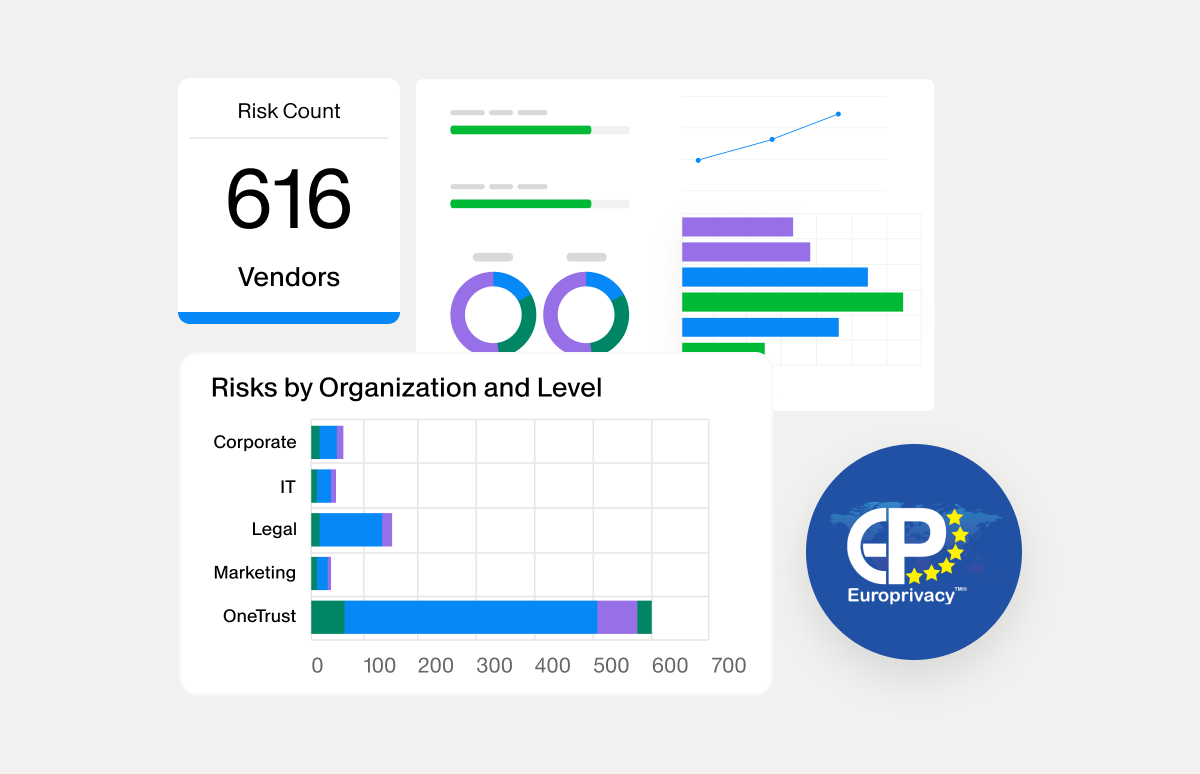
GDPR requires organizations to work only with processors that can demonstrate compliance and maintain evidence of ongoing oversight. OneTrust simplifies this process with vendor due diligence, automated reassessments, and a centralized record of Data Processing Agreements (DPAs), transfer mechanisms, security obligations, and vendor relationships.
If a vendor falls below your standards, OneTrust triggers remediation workflows and maintains an auditable record of outcomes. As an official Europrivacy technology partner, OneTrust also helps organizations prepare for certification with built-in workflows, templates, and documentation, strengthening accountability and providing regulators with clear evidence of a mature compliance program.


"The decision to choose OneTrust was determined by a key capability: the ability to use questionnaires in multiple departments, demonstrating accountability and adherence to the Privacy by Design principle."
Daniele Bianchi
DPO, EOLO
You May Also Like


Frequently Asked Questions
Article 35 requires a DPIA before processing that is "likely to result in a high risk" to the rights and freedoms of individuals. Mandatory triggers include:
- Systematic and extensive profiling used to make decisions with legal or similarly significant effects
- Large-scale processing of special category data
- Systematic monitoring of publicly accessible areas
OneTrust assesses DPIA triggers within the privacy assessment workflow, mapping proposed processing activities against Article 35 criteria and applicable DPA risk lists. When a threshold is met, a DPIA is initiated automatically, pre-populated with the relevant processing details, and routed for DPO review.
Article 30(1) requires controllers to maintain a written record containing:
- The name and contact details of the controller and DPO
- The purposes of processing
- A description of categories of data subjects and personal data
- Categories of recipients of personal data
- Details of any transfers to third countries and the safeguards applied
- Planned retention periods
- General description of technical and organizational security measures
Article 30(2) imposes an equivalent obligation on processors. Both sets of records must be made available to supervisory authorities on request.
OneTrust generates and maintains this record automatically, drawing from assessment responses, system integrations, and bulk imports. As processing activities change, the RoPA updates in place rather than requiring manual refresh each time a system, vendor, or data flow changes.
A Record of Processing Activities is a formal legal document required by Article 30 — a structured statement of how personal data is processed, maintained for regulatory inspection. A data inventory is the operational process of discovering and cataloging where personal data exists across systems, applications, and vendors. A data map visualizes data flows and lineage across the organization.
The three serve different purposes but need to stay in sync: a change in your data inventory (a new system, a new vendor, a changed retention period) should trigger an update to your RoPA. OneTrust connects the processing inventory to assessment workflows and system integrations so changes discovered during data mapping propagate to the live RoPA record, rather than sitting in a separate spreadsheet that goes stale.
From Article 30 records to data subject rights fulfillment, OneTrust connects every GDPR obligation into a single accountability program your DPO can defend and your Data Protection Authority can audit.
GDPR is not equivalent to CCPA, LGPD, or other national frameworks, but they share foundational principles: data subject rights, purpose limitation, data minimization, accountability, and transparency. Building a GDPR-compliant program provides a strong baseline for multi-jurisdiction compliance because it typically exceeds the requirements of less stringent frameworks on key controls.
OneTrust supports multi-framework compliance mapping so organizations can document where a single control satisfies obligations under GDPR, CCPA, and LGPD simultaneously, and where jurisdiction-specific configurations are required, rather than maintaining separate compliance programs for each regulation.
GDPR compliance is not static. The regulation itself has been supplemented by EDPB guidelines, national DPA enforcement decisions, adequacy rulings, and the evolving enforcement priorities of individual supervisory authorities. Organizations operating across multiple EU member states also face variation in how national DPAs interpret and apply GDPR requirements.
Practically, this means compliance teams need a mechanism to: monitor EDPB guidance as it is issued; track DPA enforcement decisions relevant to their processing activities; update internal policies and controls when guidance changes; and communicate those updates to the teams responsible for implementation.
OneTrust connects your privacy program to a continuously updated regulatory library, so changes in enforcement guidance can be surfaced against your existing policy and control structure rather than requiring a manual gap analysis from scratch.
Operationalize GDPR compliance with OneTrust
OneTrust is the AI‑Ready Governance Platform™ that enables organizations to create and maintain live privacy program that keeps records current, enforces consent across downstream systems, and fulfills data subject requests on time with full documentation.